Table Of Content

Coincidental events include divorce, changing of living situation, changes in school or work schedule, physical injury, changes in a setting such as construction, changes in coworkers or staffing, and many others. Coincidental events share the characteristic that their behavioral impact is expected to be a function of particular dates. Controlling for coincidental events requires attention to the specific dates on which events occur. However, the four possible points of integration used by Teddlie and Tashakkori (2009) are still too coarse to distinguish some types of mixing. Mixing in the experiential stage can take many different forms, for example the use of cognitive interviews to improve a questionnaire (tool development), or selecting people for an interview on the basis of the results of a questionnaire (sampling).
Extraneous variables (EV)
In their quality improvement study to enhance colorectal cancer screening in practices, Shaw and colleagues collocated a series of qualitatively identified factors with CRC screening rates at baseline and 12 months later (Shaw et al. 2013). There are a number of secondary considerations for researchers to also think about when they design their studies (Johnson and Christensen 2017). Now we list some secondary design issues and questions that should be thoughtfully considered during the construction of a strong mixed methods research design. Notice that Morse and Niehaus (2009) included four mixed methods designs (the first four designs shown above) and four multimethod designs (the second set of four designs shown above) in their typology.
Experimental Design: Types, Examples & Methods
The more one knows and thinks about the primary and secondary dimensions of mixed methods design the better equipped one will be to pursue mixed methods research. The sixth design dimension or consideration is whether a design will be fully specified during the planning of the research study or if the design (or part of the design) will be allowed to emerge during the research process, or a combination of these. One sort of complexity mentioned was multilevel designs, but there are many complexities that can enter designs. The key point is that good research often requires the use of complex designs to answer one’s research questions. It is the responsibility of the researcher to learn how to construct and describe and name mixed methods research designs. Always remember that designs should follow from one’s research questions and purposes, rather than questions and purposes following from a few currently named designs.
Independent Measures
In the end, judgments about the plausibility of threats and number of tiers needed must be made by researchers, editors, and critical readers of research. This article provides an update on mixed methods designs and principles and practices for achieving integration at the design, methods, and interpretation and reporting levels. Mixed methodology offers a new framework for thinking about health services research with substantial potential to generate unique insights into multifaceted phenomena related to health care quality, access, and delivery.
This consensus is that nonconcurrent multiple baseline designs are substantially weaker than concurrent designs (e.g., Cooper et al., 2020; Johnston et al., 2020; Kazdin, 2021). Nonconcurrent designs are said to be substantially compromised with respect to internal validity and in general this limitation is ascribed to their supposed weakness in addressing threats of coincidental events (i.e., history). A close examination of threats to internal validity in multiple baseline designs reveals and clarifies the critical design features that determine the degree of experimental control and internal validity of either type of multiple baseline. The within-tier analysis seeks replication of these potential treatment effects in additional tiers of the design. If this pattern—a clear prediction from baseline being contradicted when and only when the independent variable is introduced—can be replicated across additional tiers of the multiple baseline, then the evidence of a treatment effect is incrementally strengthened. Although it is plausible that an extraneous variable’s influence could coincide with one phase change, it is less plausible that such a coincidence would occur twice, and even less plausible that it would occur three times.
Inline dynamometry provides reliable measurements of quadriceps strength in healthy and ACL-reconstructed ... - ScienceDirect.com
Inline dynamometry provides reliable measurements of quadriceps strength in healthy and ACL-reconstructed ....
Posted: Sat, 23 Dec 2023 22:06:18 GMT [source]
The assumption that all tiers respond similarly to maturation may be somewhat more problematic. A given period of maturation may affect various participants, various behaviors, or behaviors in various settings in different ways. For example, for a child who is on the cusp of walking, a month of exposure to maturational variables may result in a significant improvement in walking, but much less change in fine motor skills.
Ecological validity
The Three-Item Loneliness Scale displayed satisfactory reliability and both concurrent and discriminant validity. Moreover, the three-item telephone version corresponds to the scale formed from the same three items when asked in the full in-person scale. Because most large-scale surveys rely on probability samples of the U.S. population, knowing that both the three-item and full scales work in the general population is important.
Child wasting and concurrent stunting in low- and middle-income countries - Nature.com
Child wasting and concurrent stunting in low- and middle-income countries.
Posted: Wed, 13 Sep 2023 07:00:00 GMT [source]
1Comparison of our sample with the entire set of respondents to the 2002 Health and Retirement Study (HRS) revealed few differences. Our sample appears more likely to be married and is slightly younger than the entire sample. Overall, however, our sample appears to represent the U.S. population age 54 and above quite well. The module sample also included spouses of HRS sample members who were younger than age 54. In the second column, we display the characteristics of persons in the same age range in the HRS national sample. Because the CHASRS sample contains a higher fraction of Black and Hispanic respondents than the HRS, we also display the sample characteristics for each study separately by race/ethnicity.
A Second Methodological Criticism of Nonconcurrent Designs: Prediction, Verification, Replication
(a) Credibility – refers to suggestions that employing both approaches enhances the integrity of findings. GPD supports Berkeley’s students throughout their graduate studies as they develop skills and competencies sought by employers in a wide range of fields. MDes students may apply for GSI positions, when they are available, for undergraduate design courses offered at The Jacobs Institute for Design Innovation. These teaching opportunities are optional and MDes students are expected to be able to balance GSI responsibilities with their own educational commitments with little difficulty. UC Berkeley offers more than 120 graduate programs representing the breadth and depth of interdisciplinary scholarship.
Additionally, it can also provide useful information about a new measurement tool’s accuracy when compared to an established one. Charlotte Nickerson is a student at Harvard University obsessed with the intersection of mental health, productivity, and design. The variable the experimenter manipulates (i.e., changes) is assumed to have a direct effect on the dependent variable. The researchers attempted to ensure that the patients in the two groups had similar severity of depressed symptoms by administering a standardized test of depression to each participant, then pairing them according to the severity of their symptoms. One member of each matched pair must be randomly assigned to the experimental group and the other to the control group. Although order effects occur for each participant, they balance each other out in the results because they occur equally in both groups.

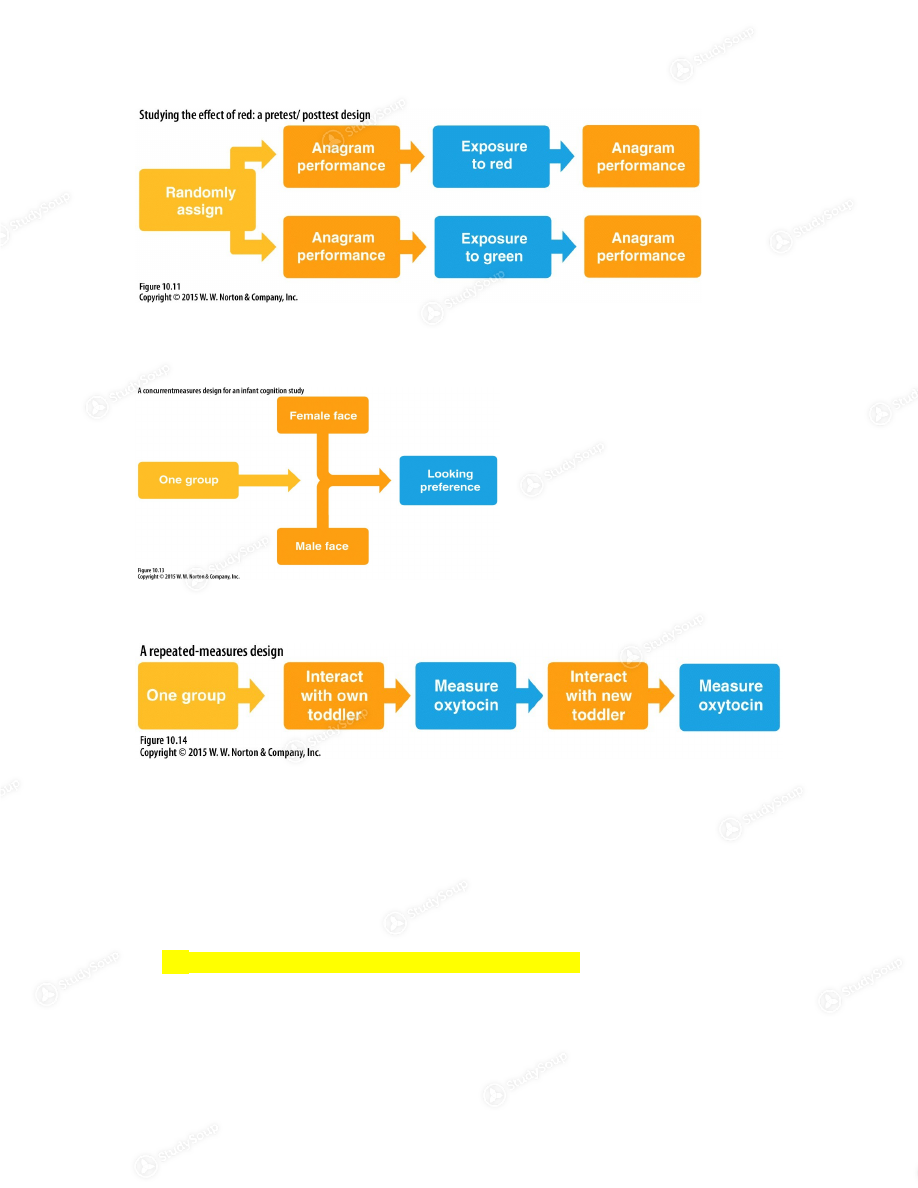
They indicate how the qualitative and quantitative research components of a study relate to each other. These purposes can be used post hoc to classify research or a priori in the design of a new study. When designing a mixed methods study, it is sometimes helpful to list the purpose in the title of the study design. In repeated measures designs, the subjects are their own controls because the model assesses how a subject responds to all of the treatments.
Textbook authors, editors, and readers of research should consider nonconcurrent multiple baseline designs to be capable of supporting conclusions every bit as strong as those from concurrent designs. The issue of concurrence of tiers should be considered along with many other design variations that can be manipulated to create a design that fits the particular experimental challenges of a particular study. Instead, the idea that lag across phase changes includes three important dimensions and that these lags are critical for establishing experimental control and justifying strong causal conclusions should be elevated in importance. As we mentioned above, across-tier comparisons require the assumptions that coincidental events will (1) contact and (2) have similar effects on all tiers of the design. To understand the ability of concurrent designs to meet these assumptions we must distinguish different types of coincidental events based on the scope of their effects. A coincidental event may contact a single unit of analysis (e.g., one of four participants) or multiple units (e.g., all participants).
The logic of replicated within-tier analysis applies equally to concurrent and nonconcurrent designs. Based on the logic laid out in this article, we believe that the treats of maturation and testing and session experience are controlled equivalently in concurrent and nonconcurrent design. Further, for both types of multiple baselines, the threat of coincidental events should be evaluated primarily based on replicated within-tier comparisons. Any one tier may, at best, demonstrate a potential treatment effect; however, a set of three or more tiers may strongly address the threat of coincidental events and clearly demonstrate experimental control.




No comments:
Post a Comment